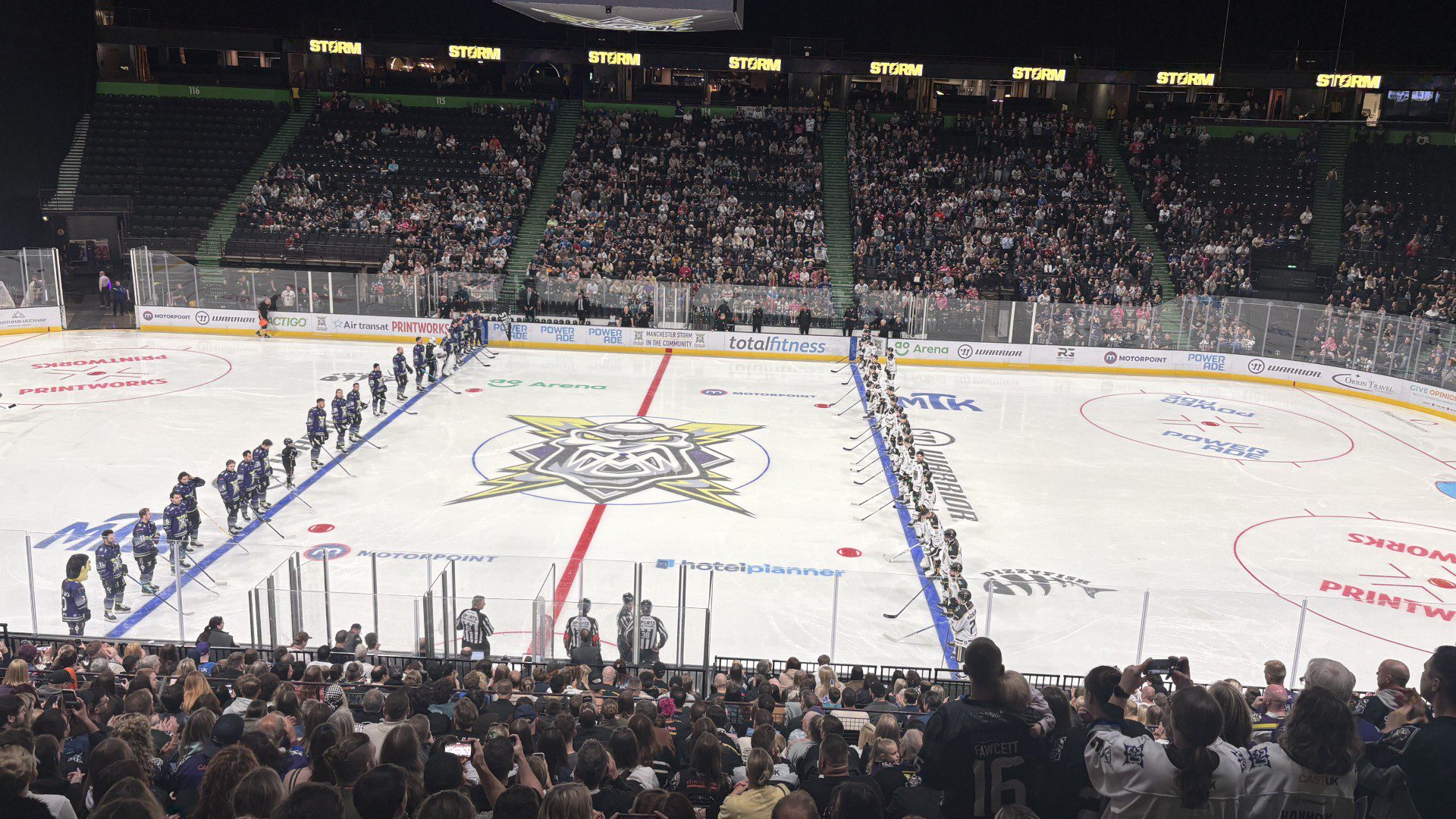
Manchester Storm made the bold, headline-grabbing move to the AO Arena over the summer and in their first game back, a huge crowd of 11,062 watched the return against Sheffield Steelers.
But disaster struck just a week later, when their first competitive game against Nottingham Panthers was cancelled after a delay of more than three hours due to ‘a technical issue with the ice’.
As someone who watched the original Storm team, which collapsed in the early 2000s due to the huge costs associated with playing in the then MEN Arena, and then watching Manchester Phoenix rise from the ashes of that to first play at the arena before moving to Altrincham Ice Dome and eventually things going full circle to the Storm returning, the first game back was something to look forward to.
Working in sport for the past 20 years, I sympathise with Storm for the issues which go beyond their control, but the way things were managed and communicated let them down.
It’s a bold move to go back to the arena, where some hockey insiders tell me they’ll need around 5,000 fans to make it stack up financially. That will require them to pick up a lot of casual followers to pad out the bigger games, the sort of people that will have well and truly been alienated by the events of the weekend.
Timeline of a hockey afternoon with no hockey
Arriving at 3.40 for the 4.00 scheduled face-off time, there were queues at the entrance but thought nothing of it, as they were moving fairly quickly. When we got through to the concourse, it was packed and it became clear the doors, which were due to open at 2.30, were not open.
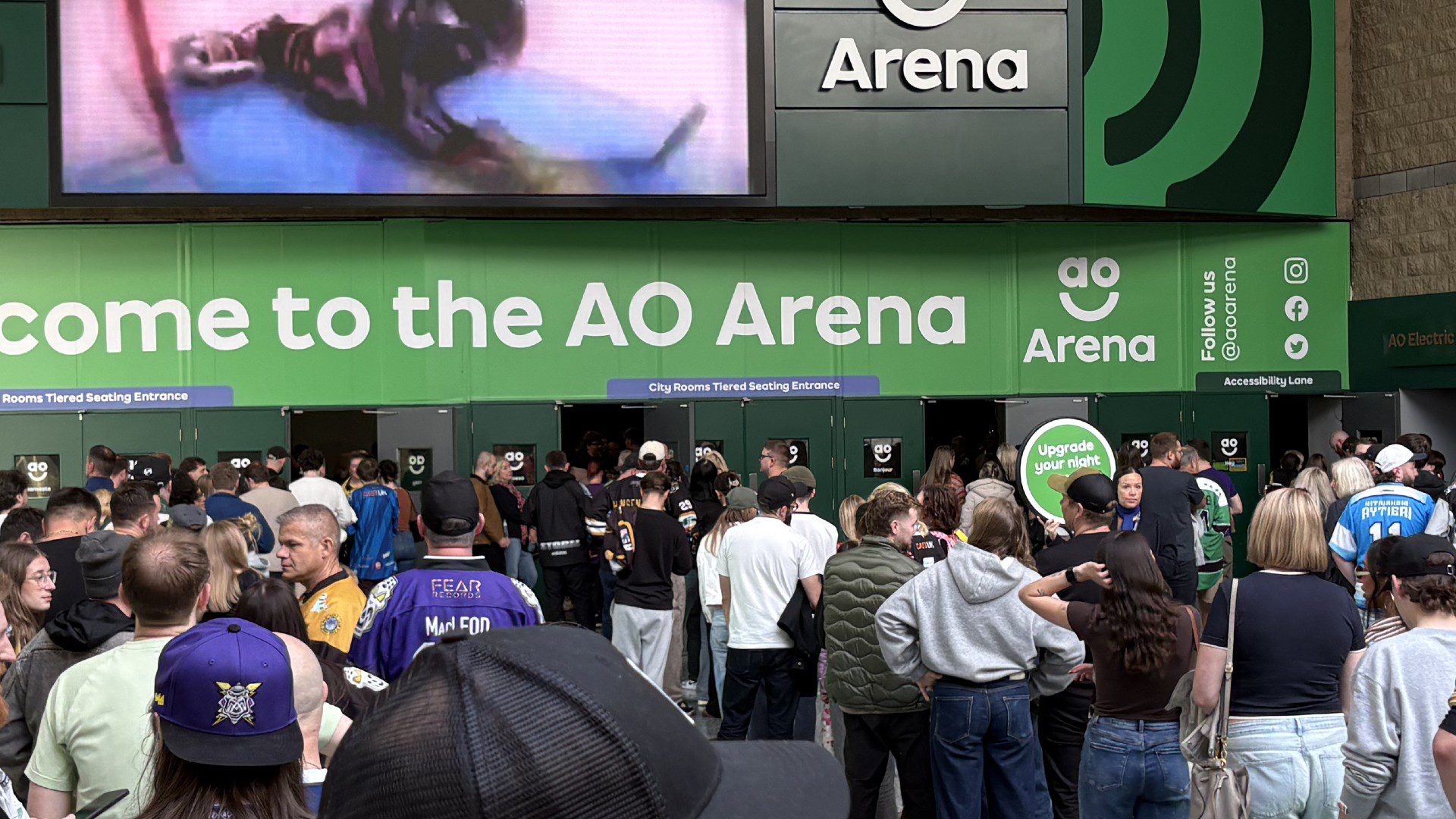
There was no communication of this anywhere in or out of the arena, or by the door staff as they scanned you in. A quick on the Manchester Storm X/Twitter feed revealed that there had been a delay (no reason given) and that doors would open at 3.50 for a slightly later face-off time of 4.20.
By 4.00, the doors still hadn’t opened. There was still no communication. What didn’t help was that people weren’t being told that actually if they moved around, there were some spaces that opened out where there was more space. As it was, people were sticking around near the doors where their seats were, compounded by the bar areas and other queues.
The concourse was stuffy and packed. I saw a young child carried off by paramedics. 4.30 came and still there was nothing, but then a few doors opened and there seemed to be movement, apart from in a couple of blocks.
Radio silence
Now, given the history of the AO Arena, communications should be top priority. Indeed Martyn’s Law, a legacy of the Manchester Arena bomb attack, is being introduced across all venues over a certain capacity to enable quick communication.
Of course, this wasn’t a terrorist incident or even one of a serious nature. But surely if venues are installing this technology, they can use it to communicate basic messages to keep people in the loop.
As it was, people had no idea what was causing the delay or how realistic it was that it would be opening any time soon. The murmurs were that the arena just simply hadn’t been set up following a Hilary Duff concert the night before, and there were issues installing the plexiglass around the penalty box.
Once, we got inside, things didn’t get better. Initially, it seemed everything was fine. The players were introduced to the ice and the national anthem was played with the view to finally facing off at 5.00, but then the officials clearly weren’t happy with a portion of the ice along one side.
For a while, the match day host tried to distract people with a Mexican wave and various crowd entertainment – but it soon became clear there would be a significant delay, as a handful of technical staff attempted to resolve the situation with a shovel, a fire extinguisher and a bucket of ice.
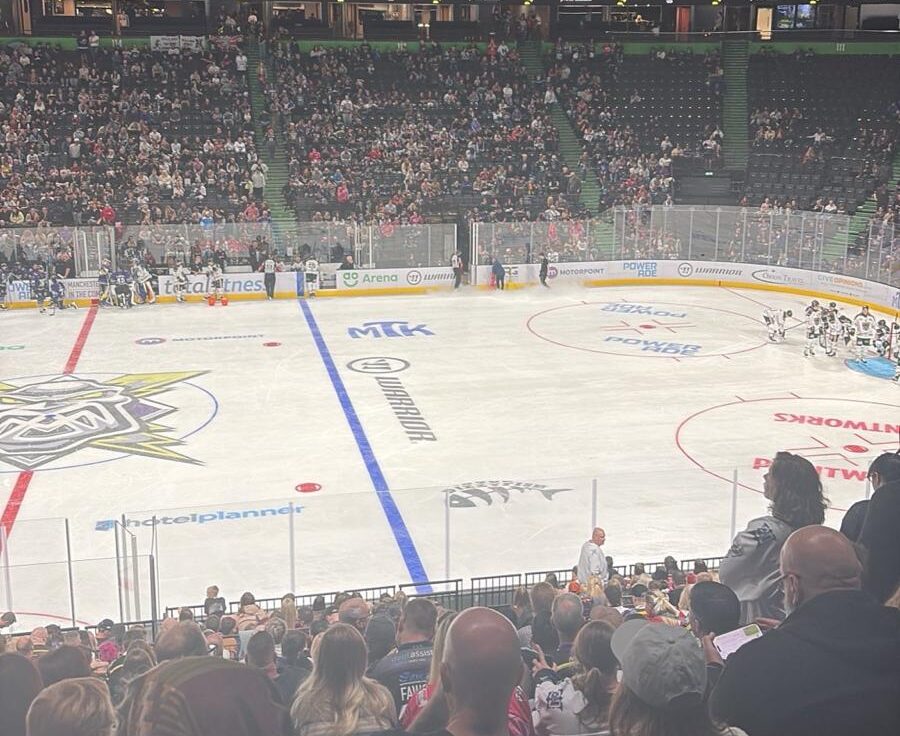
The players remained on the ice at this time. Perhaps if it was later in the season, and they were more familiar with the arena and indeed with the fans, they may have done more to engage with the fans. It’s difficult for them as they are professional players not entertainers, but they are perhaps the easiest way to distract a crowd.
And so we sat, and watched, and waited. Half hour passed, then an hour had passed. It was now 6.00, two hours after the original face-off time, and there had still been no explanation or apology made to the crowd. People were booing. Some frustrated fans were shouting out to just tell us if it’s off so we can go home.
Eventually, the announcer said ‘we’re going to give it another 15/20 minutes for the ice to set and try again’. At that point, quite a few people started to leave. At 6.20, after the Nottingham players had just left the ice, an announcement came to say that they were going to try to start at 7.30.
The end of the road
Having been to my fair share of ice hockey matches over the years, it seemed clear that there wasn’t going to be a game. Whatever they had been doing in that 90 minutes to try and fix the issue wasn’t miraculously going to fix it in the next hour.
Call it off lads – that’s concrete pic.twitter.com/rcECz4Iz7v
— Dan (@Ghostieistaken) September 13, 2026
We decided to go out and get some food at this point, to be told on exiting that there would be no re-entry. Although that was poor in itself, I can understand the security implications of that in terms of bag-searches etc. However, there should surely be a contingency to re-set up the bag check in extraordinary situations like this.
As it happened, when we ventured back towards the arena at 7.20, there were streams of people heading out the arena so it became clear an announcement had finally been made that the game had been cancelled.
The Nottingham fans who had travelled, paid for trains or for parking, now faced the journey home having seen no hockey.
The re-scheduled game is on a Wednesday night in the middle of October.
Crisis management
While the communication on the day was poor, at least actioning refunds via Ticketmaster has been relatively painless.
But I can’t help but think the arena and Storm have lost a lot of people from the day. People are reasonable if they are treated reasonably. I commend Storm for getting back to the arena. But they’re going to need a lot of people to make it work, and some of those people they will have alienated through poor communication.
I’ve been to thousands of sporting events at hundreds of venues, but I’m not sure I’ve had a worse experience than that.
The social media admins were probably as much in the dark as we were, so it required better leadership to ensure clearer messaging got out there. Without X/Twitter, I’d have known zero. Even with it, I knew very little.
I’ve seen people blame the AO Arena. Sure, the ultimate responsibility lies with them. But Joe Public isn’t necessarily bothered about that. They pay Storm to watch hockey. If they have a bad experience, it relates as much to Storm as it does the arena.
Clubs in other sports are trying to do the same. Blame the stadium operator for a bad experience. But that will only wash for so long.
Whether there was a fear of being embarrassed online, the economic worry of calling off the game or something else, it shouldn’t have taken three and a half hours past the scheduled face-off time to call the game off.
It was 22 years since my last game at the arena – after yesterday’s debacle, I’ll have to wait a few more weeks for the next one!